
School Wide Positive Behaviour Support
School-Wide Positive Behaviour Support (SWPBS) is an approach that helps schools create safe, positive, and inclusive environments where students and staff can thrive.
Research shows that explicitly teaching, recognising and reinforcing positive behaviour strengthens social skills and supports student learning. We understand that social and communication skills develop over time, and that every child progresses at their own pace.
Families play an important role in this process. By understanding SWPBS and reinforcing similar expectations at home, you can further support your child’s development.
Why are we using SWPBS?
SWPBS pilot programs were trialled in Victoria since 2008 and a range or evaluations demonstrated a range of positive outcomes, including:
Calmer, more supportive school environments
Improved student social skills through a consistent, whole-school approach
Stronger, more respectful relationships between staff and students
Greater staff confidence, morale and teamwork
Clearer student understanding of behavioural expectations and increased motivation to meet them
Reduced incidents of extreme behaviour and fewer office discipline referrals
Improved learning environments, leading to stronger academic outcomes (University of Melbourne, 2011)
At its core, SWPBS recognises that behaviour is influenced by the learning environment. To effectively address challenging behaviour, school leaders and teachers must understand the connection between behaviour and context.
Rather than focusing on punitive responses, SWPBS emphasises proactive, positive strategies. By clearly teaching expectations, consistently monitoring behaviour and acknowledging positive choices, we aim to reduce inappropriate behaviours and build a strong, supportive school culture.
Guiding Principles of SWPBS
SWPBS is based on the following principles:
Behaviour is learned and can be explicitly taught.
Environments can be intentionally designed to encourage positive behaviour.
Understanding the relationship between individual factors and environmental influences is essential when supporting students with behavioural, social, emotional or mental health needs.
Adjusting environmental factors can predictably influence behaviour.
Adults must respond consistently and systematically — effective systems of support are needed for both students and staff.
What does SWPBS look like at Wonga Park Primary School?
At our school, expected behaviours are explicitly taught to all students, as outlined in our Student Behaviour Matrix. These expectations are reinforced throughout the day and across all school settings.
We:
Teach behaviour expectations as intentionally as we teach academic skills
Discuss why these behaviours are important
Model and demonstrate appropriate social skills
Provide specific, positive feedback
Reflect and adjust supports to help each student succeed
WPPS Expected Behaviour Matrix
WPPS Expected Behaviour Matrix (written/visual)
WPPS Expected Behaviour Matrix (visual)
Our Reward System
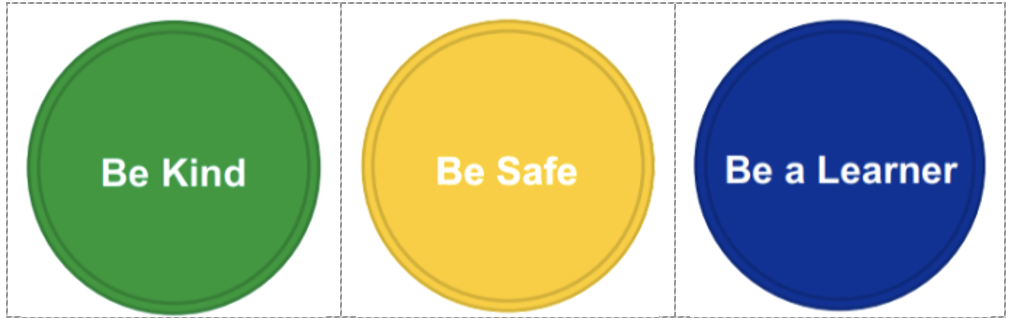
To reinforce positive behaviour, we have implemented a whole-school recognition system. Students who demonstrate behaviours aligned with our school values may receive a Be Kind, Be Safe or be a Learner token.
Encouragement, guidance and recognition help students strengthen their skills and contribute to a positive, predictable school culture.
Through acknowledging positive behaviour, students:
Feel motivated by rewards they can work towards
Remain engaged through positive reinforcement
Develop intrinsic motivation
Recognise and celebrate their own success
Receive meaningful positive feedback
Strengthen their understanding of behavioural expectations
Together, through a consistent and positive approach, we aim to create a safe, respectful and thriving learning environment for every student.
A Tired Approach
At Wonga Park Primary School, we believe all members of our community should treat one another with courtesy and respect. Guided by our School-Wide Positive Behaviour Support (SWPBS) framework, we implement a consistent, whole-school approach to behaviour and classroom management. We are committed to a consistent approach to classroom management that supports a positive, safe and effective learning environment. We encourage students to take responsibility for their behaviour and to take pride in their school.
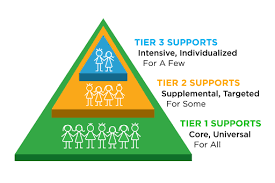
Our school uses a three-tiered continuum of support to promote both learning and wellbeing for every student. This framework ensures that additional support is available whenever it is needed. An outline of the tiered approach is provided below.
Tier One – Supporting A Whole School Approach
Tier 1 strategies focus on building a positive school and classroom culture through a range of proactive approaches that create a safe and effective learning environment. These strategies form the foundation of our practice and are implemented consistently across the whole school by all staff to ensure clarity, predictability and shared expectations.
Whole school strategies
Classroom strategies
• SWPBS behaviour matrix
• Positive acknowledgement system
• Wellbeing curriculum
• Community Connections
• Student leaders
• Consistent routines
• School houses
• Buddy program
• Camps, excursions and incursions
• Lunchtime clubs
• Shining Star Award
• Daily Community Connections
• Positive acknowledgment/Positivity Points
• Consistent routines
• Visual timetables
• Reading/Calm corner •
Brain breaks
• Start Up program (Term 1)
• Differentiated lesson planning
• Environment design (layout/transitions, seating)
• Teacher modelled behaviour • Active supervision
Tier Two – Early Intervention
Tier 2 provides targeted intervention for students who require additional support to develop and maintain positive behaviours.
At this level, students may receive increased guidance and supervision, explicit teaching of expected behaviours, structured positive reinforcement, and additional academic support. Strategies such as pre-corrections and identifying the underlying function of behaviours are also used to ensure supports are purposeful and responsive to individual needs.
Whole school strategies
Classroom strategies
• Consistent and calm response
• Restorative practices
• Student Support Group
• Individual Education Plan
• Learning intervention groups
• Social skills group (RR Education based)
• Student behaviour incident / reflections forms
• Restorative practices
• Sentral reporting
• Increased parent/carer communication
• Increased acknowledgment of positive behaviours
• Identify triggers and function of behaviour • Use of SWPBS tools: Prompt/Redirect/Reteach/Direct Choice
• Goal setting
• Classroom based Check-Ins/Check-Outs
• Brain breaks (targeted)
• First and Then charting/Social Stories
Tier 3 – Individual Intervention
Tier 3 behaviour supports involve highly individualised strategies for students with the most ongoing, complex and significant behavioural needs. These students may demonstrate behaviours that are highly disruptive or unsafe, requiring intensive, personalised intervention. Careful planning and consistent implementation of Tier 3 supports are essential to promote the student’s safety, wellbeing and academic growth, while also supporting the broader school community.
Tier 3 supports focus on:
· Identifying students who require intensive intervention.
· Conducting a Functional Behaviour Assessment (FBA) to better understand the underlying purpose of the behaviour.
· Implementing a Student Support Group (SSG) approach to collaboratively plan and review supports.
· Monitoring the fidelity and impact of interventions to ensure they are effective and responsive.
· Providing additional support for classroom teachers, including access to professional learning, time to attend SSG meetings, and opportunities to consult with specialist support staff.
Whole school strategies
Classroom strategies
• Student Support Group
• Individual Education Plan
• Functional Behaviour Assessment
• Behaviour Support Planning
• Student Safety Plans
• Risk assessment
• Psychs in School program
• Engagement with internal/external support agencies
• Sentral data collection
• Scheduled Check-Ins/Check-Outs
• Planned Play
• Increased acknowledgement of positive behaviour
• Communication with parent/carers
• Explicit goal setting and teaching
• Reasonable adjustments
• Classroom teachers are provided additional support via professional learning, release time to attend meetings etc

